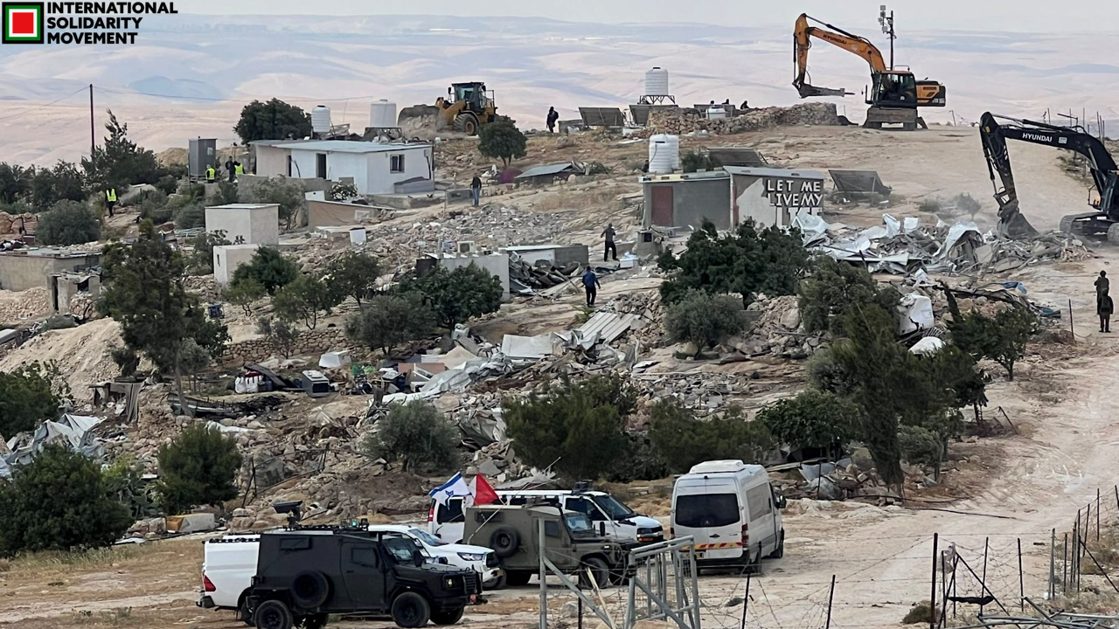
It was dawn on a Tuesday morning in the southern Hebron Hills of occupied Palestine. This meant a demolition was imminent given that is the day homes are typically razed by the illegal occupation. After returning before daybreak from a clandestine night of protective presence as a volunteer with the International Solidarity Movement in the notorious Firing Zone 918, I sprinted to the top of a hill in Masafer Yatta as an Israeli bulldozer reeled forward.
The Palestinian home it targeted and set about destroying was modest but built with quiet pride and care. It rested just above the village’s small school, already holding within it a multitude of memories, hopes, and dreams. Prior to levelling the house, armed Israeli Occupation Forces (IOF) soldiers aggressively cordoned off staggered perimeters by forcibly expelling any Palestinian or international observer from the area.
The family scrambled to sweep up any possessions they could amidst being shoved out at gunpoint. As a hydraulic arm tore through the home’s metallic roof and stone walls, a father shouted in defiant anger while a shocked and confused child cried into his consoling mother’s chest. Minutes later, all that remained was a scattered pile of concrete rubble and twisted metal. The Israeli convoy then smashed and buried a water cistern, which is essential for Palestinian survival in the arid region.
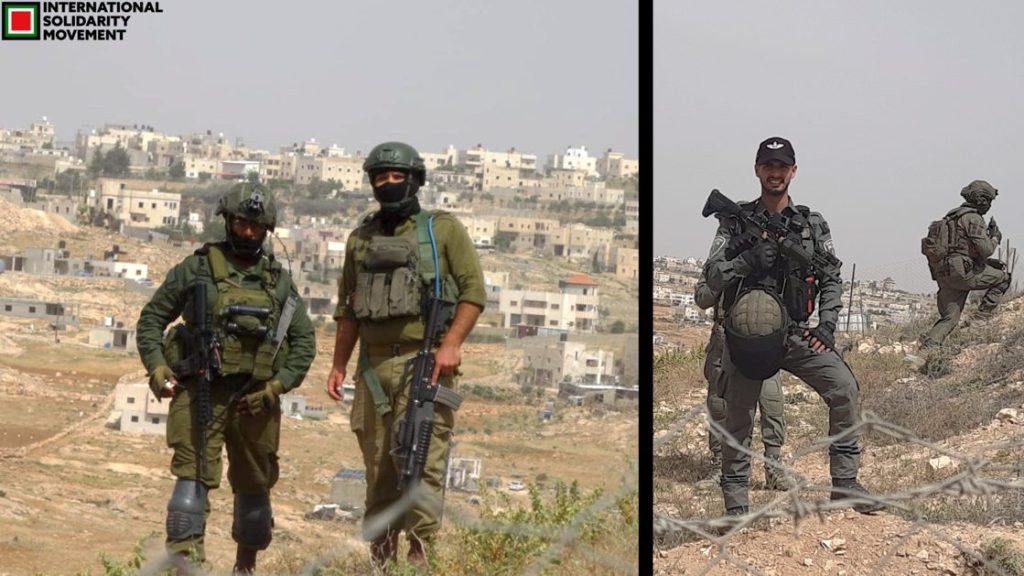
I turned to see IOF soldiers scornfully sneering with satisfaction as Muslim women behind a barbed wire fence accosted them verbally. As the women moved forward fearlessly to oppose the army, I stood alongside them, admittedly struck and inspired by their courage and resolve, recording with my phone as tear gas and arrest threats hung in the air. We had just witnessed a vulgar and violent display of settler colonial power—the women took action.
In confronting the IOF without hesitation, they put their bodies on the line risking detainment, detention, and even death. What might have appeared to some merely as reactive indignation born out of resentment was also, in fact, a politically grounded challenge to the hyper-masculinist militarism of the Zionist occupation. In reflecting upon how the Palestinian women stood their ground, I could not help but think of Israel’s systematic use of sexual, reproductive, and gender-based violence, which is not incidental but instrumental to its settler colonial order.
Human Beasts, Children of Darkness
When it comes to Palestinian life and land relations in the occupied West Bank, the abuses and atrocities of the illegal occupation are inflicted in broad daylight. Demolitions are carried out in plain sight as a sadistic and militarised spectacle to assert ownership over land, time, and life itself. Considering the degree to which Israeli colonial violence has been normalised, it is no surprise that recent chants of “death, death to the IDF” have resonated so deeply amongst the reasonable masses.
For generations, the explicit aim of the Zionist movement has been to crush an oppressed and subaltern people, steal their land, and abduct and disappear those who it has condemned as “human beasts” and “children of darkness”. For the Israeli state and its chauvinistic officials, deracinating Palestinians and wrecking their lives have become dogmatic rituals oriented towards stoking fear, inducing stress, and prompting submission. The anticolonial militant and revolutionary theorist Frantz Fanon[1] provides us with the language to understand the racial logics and socio-spatial dimensions of settler occupation:
Looking at the immediacies of the colonial context, it is clear that what divides this world is first and foremost what species, what race one belongs to … The colonial world is a compartmentalized world … (p.5, 3)
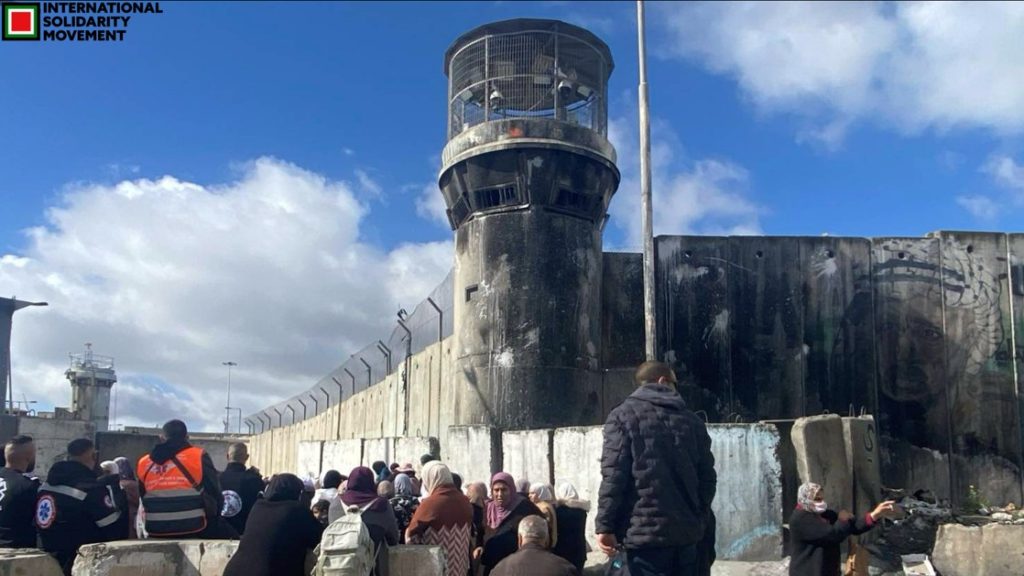
Indeed, Palestinian communities inhabit a carceral geography in which they have been deemed disposable and confined to open air prison precincts. I watched, in a state of surreal outrage, as daily movement was strictly monitored and controlled by apartheid walls, assault rifles, and razor-wired checkpoints. At an astonishing pace, Palestinian ancestral agricultural lands and pastoral ranges are being confiscated and converted into military “firing zones” and entrepreneurial “farming outposts”.
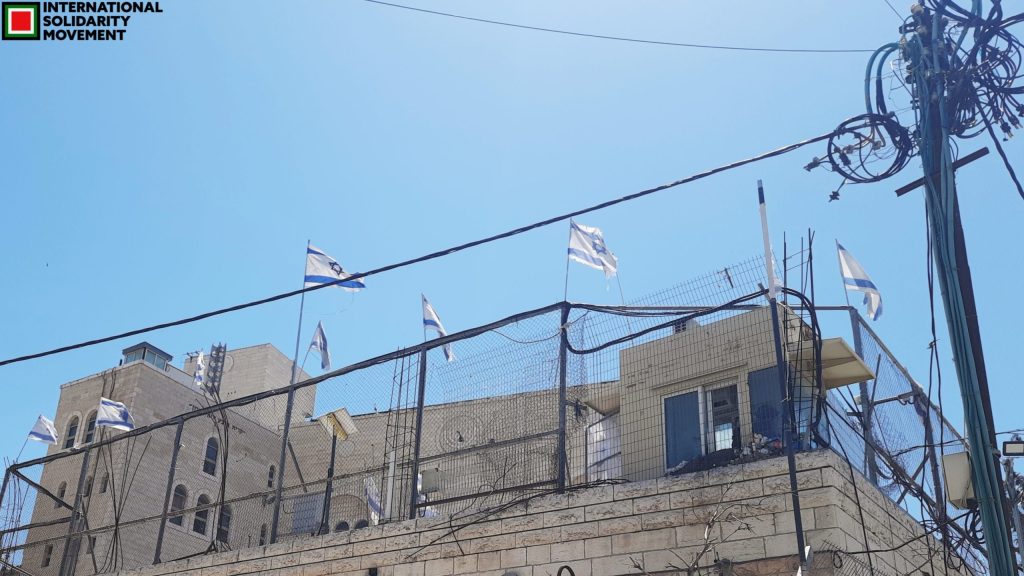
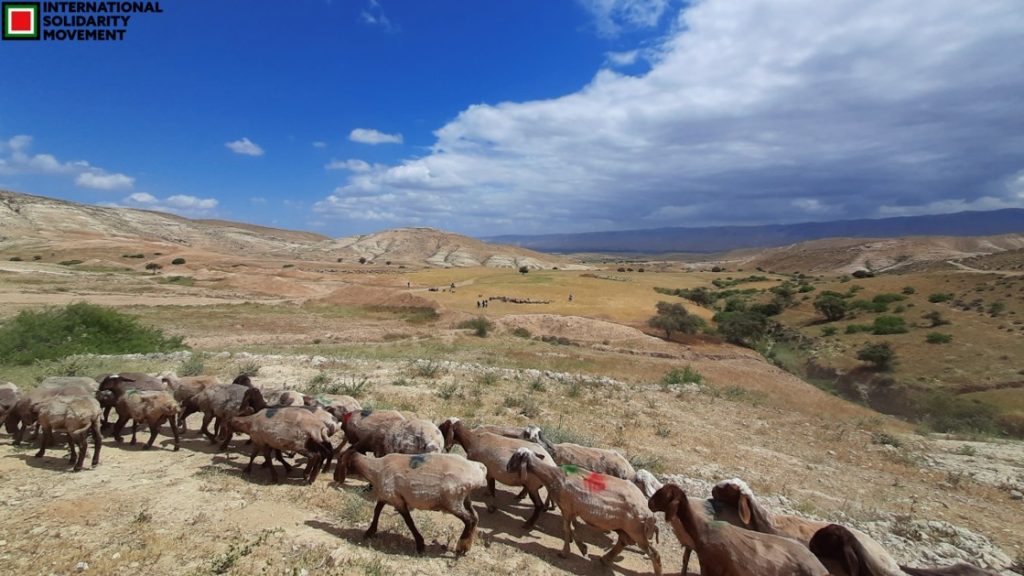
When accompanying Palestinian shepherds through both the southern Hebron Hills and the northern Jordan Valley, I moved through fields riddled with Israeli flags and overshadowed by the looming edifice of apartheid. The sky above carried the ominous noise of surveillance drones, fighter jets, and ordnances detonating. On a recurring basis, illegal settlement outposts expanded further and further into seized Palestinian territories.
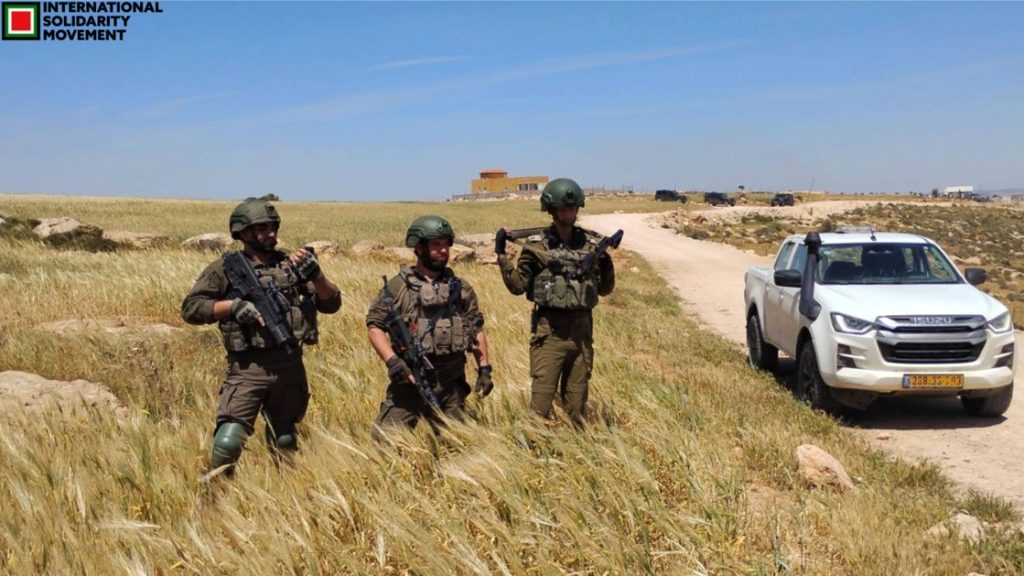
In discussions across villages, I heard accounts of applications for Palestinian homes requiring permits that were interminably delayed and ultimately never granted. Families live in acute risk of ad hoc attacks, vicious beatings, and arbitrary evictions. When armed settlers invaded rural communities to antagonise, harass, and bully both villagers and volunteers, IOF soldiers appeared shortly after to intimidate, demand IDs, and malign us as “terrorists”.
Israeli troops would then mechanically point rifles at defenceless families and proclaim the area to be closed for official purposes by the military. As Fanon explains, this is how colonial domination is enforced by agents of state violence and settler occupation:
The colonized world is a world divided in two. The dividing line, the border, is represented by the barracks and the police stations. In the colonies, the official, legitimate agent, the spokesperson for the colonizer and the regime of oppression, is the police officer or the soldier. (p.3)
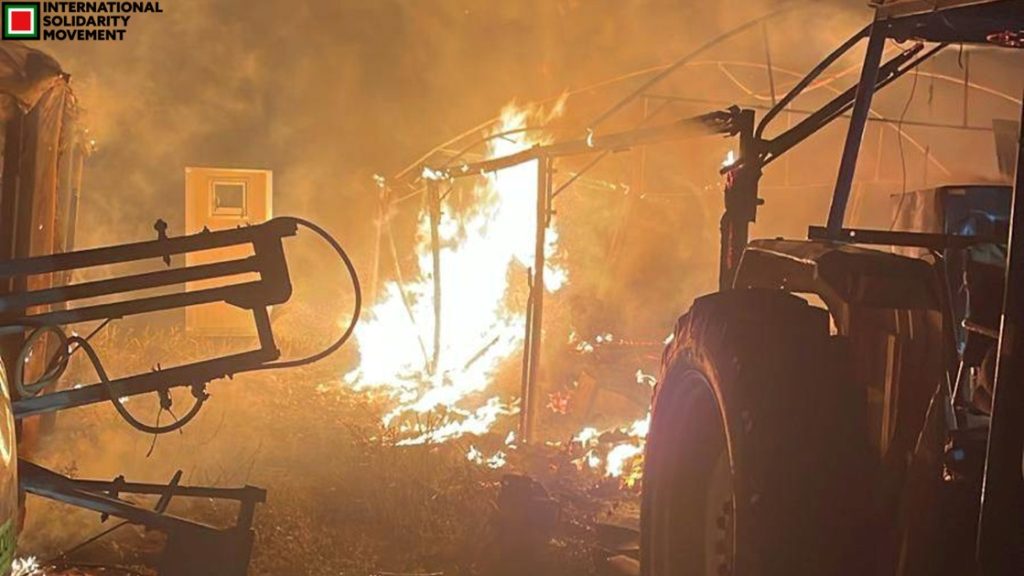
Throughout the Jordan Valley, the presence of skulking IOF soldiers and belligerent settlers is unremitting. Menacing military prowess and balaclava-clad border police send clear messages about who belongs and who must be vanquished. In nearly every Palestinian community I visited, buildings bore scars of “price tag” attacks, usually vandalism, theft, and arson.
Bedouin families across the West Bank regularly anticipated and recounted anxieties related to nighttime break-ins, indiscriminate arrests, and hooded thrashings as if they were routine. This is banal terrorism distilled—the relentless, grinding repression of occupation rendered ordinary through sheer repetition and the quotidian colonial order of things. Daily life is defined by threat, insecurity, and a persistent fear of being stalked, ambushed, and mutilated by settlers.
From what I experienced, neither IOF infantry nor Zionist occupiers hide their intent. They inflict injury upon every Palestinian space and body they encroach upon—meting out punishment with brazen arrogance and absolute impunity. Fanon captures the brutal function of those who set about initiating and administering settler colonial projects:
The agent does not alleviate oppression or mask domination. He displays and demonstrates them with the clear conscience of the law enforcer, and brings violence into the homes and minds of the colonized subject. (p.4)
Across the southern Hebron Hills, violence enters Palestinian villages long before the heavy equipment does. It arrives through hostile epithets directed at children walking to school, in addition to the stun grenades and lethal rounds that are shot at local resistance activists and human rights observers. It is made overt in bureaucratic decrees inscribed in Hebrew that, ironically, declare both Palestinian infrastructure and water sources unlawful.
The pathologies and perversions of Israeli settler colonialism are embodied and affirmed in every smirking IOF soldier who watches a home demolition—or Palestinian die—with indifference if not enthusiasm.
The contrast between Zionist settler and Palestinian space is as unmistakable as it is intentional. As I moved throughout the West Bank, from Jenin to East Jerusalem to Susiya, I caught glimpses of paved roads extending seamlessly into illegal settlements that resembled homogenised American suburbs. Conversely, Palestinian access roads—purposely neglected and obstructed—were characterised by debris, disrepair, and militarised regulation owed to occupation.
Settler housing complexes flew Israeli flags high and had installed within them efficient water systems and grocery stores that were subsidised by the state and international donors. Crimes against humanity never looked so comfortable, manicured, and “modern”. Contrariwise, austere Palestinian homes are obliterated for adding bedroom extensions, hydroponic greenhouses, and chicken coops. Fanon described such spatial disparities with striking clarity:
The colonist’s sector is a sector built to last, all stone and steel. It’s a sector of lights and paved roads, where the trash cans constantly overflow with strange and wonderful garbage, undreamed-of leftovers. (p.4)
The world of the Zionist settler in the West Bank is one of material excess, legal immunity, and bizarrely, perpetual victimhood. Their sector receives electricity, clean water, public works, and the protection of a colonial army that is bankrolled by the United States and bolstered by its sycophantic and savage Western allies. Meanwhile, both Palestinian neighbourhoods and olive groves are starved for water and marked for ruin.
When in the Jordan Valley, settlers set fire to a farm and poisoned a well that served dozens of Palestinian families. After villagers spoke out, IOF soldiers responded by barricading their dirt road. The same process unfolded in the southern region of Masafer Yatta multiple times shortly after. For me, one truth that remained inescapable was the fact that colonised spaces are deliberately designed to confine and choke—to divide and conquer.
To Destroy the Colonial World
In Palestinian villages throughout the West Bank, homes are erected with corrugated tin and recovered wood. Families pack together in narrow compounds and are often unable to expand. Israeli permitting procedures prohibit Palestinian development and distort longstanding agrarian livelihood strategies and ancestral land relations into criminal acts. Every improvement or expansion of Palestinian infrastructure risks legal scrutiny, demolition order, or just being fire-bombed.
This outcome emerges from premeditated racist policy, calculated authoritarian governance, and an inexplicable persecution complex on the part of the occupying Israeli state. In turn, any aspirations Palestinians have for continuity of life are subjected to contempt, retribution, and foreclosure. Fanon’s account of the punitive colonised sector speaks directly to such conditions:
The colonized’s sector, or at least the “native” quarters, the shanty town, the Medina, the reservation, is a disreputable place inhabited by disreputable people. You are born anywhere, anyhow. You die anywhere, from anything. It’s a world with no space, people are piled one on top of the other, the shacks squeezed tightly together. The colonized’s sector is a famished sector, hungry for bread, meat, shoes, coal, and light. (p.4)
Across the West Bank, Israeli settler colonialism expands through “legal” mechanisms and judicial edicts. Settler incursions and reprisals are sanctioned; Palestinian resistance and unrest are criminalised. Military courts secure exemptions and exceptions for settlers while Palestinian dissidents are imprisoned and tortured.
Palestinians are methodically convicted and incarcerated, in addition to systemically abandoned, abused, and humiliated. Through planned policies that serve the Zionist movement, their neighbourhoods are stripped of civic services and permanent facilities. Schools are raided at dawn and health clinics are barred from operating. In every dimension of life, scarcity is manufactured and weaponised against Palestine.
When settlers set fire to classrooms, steal livestock, shoot shepherds, or harass women, IOF officers safeguard the perpetrators, blame victims, and provide cover to condone the attacks. When Palestinians stand their ground and defend land, on the other hand, they are hunted, captured, blindfolded, slammed into armoured vehicles, and subjected to administrative detention—if not murdered in cold blood.
Fanon insisted that decolonisation cannot mean coexistence with colonial structures of dehumanisation and harm. Liberation requires the abolition of the settler’s system of domination and the annihilation of every single one of the occupier’s institutions. Some may call this an uncomfortable recourse to violence; I call it a necessary appeal to collective self-defence. Whatever it is, as Aimé Césaire reminds us, it is certainly based in “justice … pureness …generosity”.
In the face of rapacious ethnonationalist onslaught, Palestinian self-determination necessarily becomes a project of resistance and refusal, as well as return and recovery. It also mandates radical acts of rupture and transformation. The Zionist apartheid regime must burn, and its architecture reduced to ash. This is a prospect upon which Fanon reflects unapologetically:
To dislocate the colonial world does not mean that once the borders have been eliminated there will be a right of way between the two sectors. To destroy the colonial world means nothing less than demolishing the colonist’s sector, burying it deep within the earth or banishing it from the territory. (p.6)
Colonial violence across the region operates on multiple levels—material, psychological, symbolic, and spatial—each reinforcing the other to debase, defile, and dispossess Palestinians. Those being subjugated under Israeli apartheid are discursively cast as barbaric and backward primitives who dwell in profane and abject spaces. Such racial-geographical division does not merely separate human bodies; it assigns value to them.
The sub-human status ascribed to those that Zionists deem wretched and expendable produces the ideological groundwork for annexation and extermination. The Israeli settler and soldier walk, breathe, and bludgeon “Others” freely, while the colonised Palestinian suffocates on smoke, blood, and terror—I testify. Fanon casts critical light on the types of supremacist reasonings and racist epistemologies that incite and abet such violence:
The colonial world is a Manichaean world. The colonist is not content with physically limiting the space of the colonized, i.e., with the help of his agents of law and order. As if to illustrate the totalitarian nature of colonial exploitation, the colonist turns the colonized into a kind of quintessence of evil. (p.6)
When on the ground, Palestinians were denigrated and vilified by settlers for simply existing. Israeli occupiers framed children as “future terrorists” and “cockroaches” while disavowing their families as “Arab infiltrators” and an “infestation”. Zionist discourse like this rationalises every act of eradication, certificate of settlement, and call for a renewed “Nakba now”. The colonised are treated as a contagion that must be quarantined and caged at the barrel of the gun.
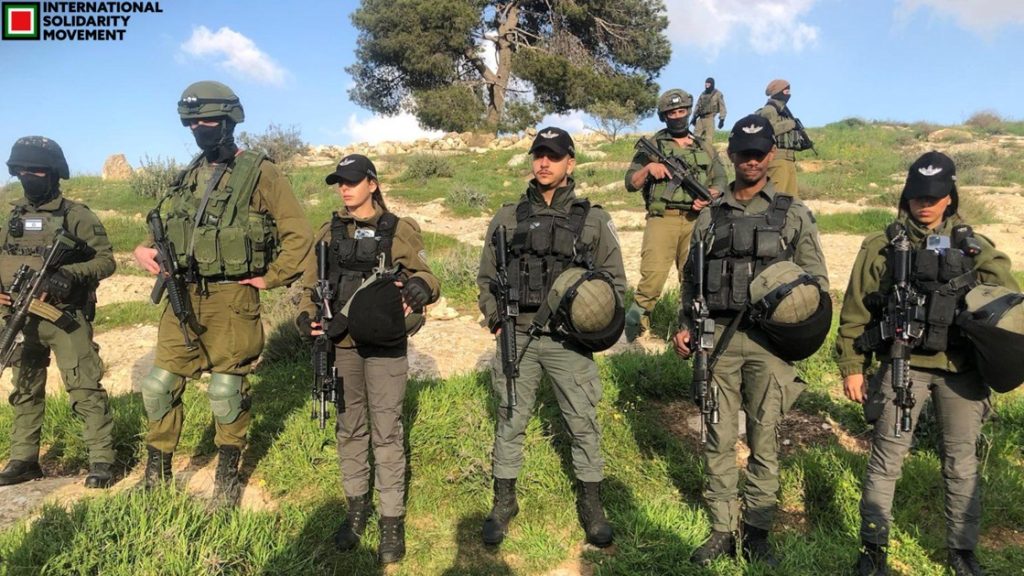
The IOF paradoxically legitimises apartheid as “security”, “self-defence”, and “safety”, all while encouraging settlers to deploy bestial metaphors, racial slurs, and spray-paint “Death to Arabs” on homes at will. The rhetoric is meant to demean and terrify, and inevitably, justify expulsion and death. Fanon references this type of sordid speech unambiguously:
Sometimes this Manichaeanism reaches its logical conclusion and dehumanizes the colonized subject. In plain talk, he is reduced to the state of an animal. And consequently, when the colonist speaks of the colonized he uses zoological terms. Allusion is made to the slithery movements of the yellow race, the odors from the “native” quarters, to the hordes, the stink, the swarming, the seething, and the gesticulations. In his endeavors at description and finding the right word, the colonist refers constantly to the bestiary. (p.7)
The language of the settler prepares the Indigenous body for violence. It strips the colonised of recognition, worth, value, and dignity. In doing so, it authorises every bulldozer and each bullet that tears into or kills anything Palestinian. It further renders any loss of Palestinian land or life ordinary, inexorable, and chillingly, predestined. An entire history and people being erased is at once callously and casually chalked up to be natural, acceptable, and “progress”.
As evidenced by the frenzied hostility and apocalyptic fury of the Zionist regime’s attempted conquest, the heart of the struggle for Palestine undeniably remains the land. Ancestral memory, material wellbeing, cultural heritage, and Palestinian life itself all are rooted in territory.
Land grabs thereby constitute more than the expropriation of economic income and financial security—they represent the disintegration of both historical and future relations. Nevertheless, Palestinians return to the land again and again—despite the death threats. Fanon writes of such elemental bonds:
For a colonized people, the most essential value, because it is the most meaningful, is first and foremost the land: the land, which must provide bread and, naturally, dignity. But this dignity has nothing to do with “human” dignity. The colonized subject has never heard of such an ideal. All he has ever seen on his land is that he can be arrested, beaten, and starved with impunity; and no sermonizer on morals, no priest has ever stepped in to bear the blows in his place or share his bread. (p.9)
In Reality, To Hell With Him
As dusk settled during a midweek evening in Masafer Yatta, our volunteer team responded to a horrific incident in which a Palestinian shepherd had been shot. An Israeli settler was placing stakes in the family’s olive grove with a few accomplices. The shepherd, in defence of his land, confronted them. The settler intruder felt “threatened” so started firing off rounds, one of which plunged into the shepherd’s upper thigh, shattering the bone.
The IOF appeared shortly after not to arrest the settler, who walked away freely, but the shepherd’s son who had admonished the armed trespasser. Upon arriving, Israeli soldiers also prevented emergency first aid from being administered. A day later, the father’s leg was amputated while he lay handcuffed to a hospital bed. This is how the Zionist occupation disciplines Palestinian resistance—through wounding, shackling, and severing. Shortly after the shepherd’s return home, the village gathered to help him start anew.
For the colonised, mutual aid and moral obligation are not abstract aspirations—they are collective insurrectionary praxis and critical elements of maintaining personal integrity. They are also weapons forged in emancipatory struggle that can be wielded to expel colonisers as a means of reclaiming both land and the future from settlers. Fanon appeals to neither compromise nor conciliation on such matters—he calls for revolting against occupation and rooting out colonial violence at its core:
For the colonized, to be a moralist quite plainly means silencing the arrogance of the colonist, breaking his spiral of violence, in a word ejecting him outright from the picture. (p.9)
The Zionist genocide of Gaza and colonial war being waged on the West Bank has been raging for generations. As decades go by, its technology, terminology, and artillery are updated and modified, but its primary objective has always remained the same—elimination. Gaza burns and bleeds while the West Bank is being ripped apart and emptied out. Checkpoints multiply, settlements expand, and Palestinian youth are jailed for throwing stones at tanks.
Amidst it all, the Israeli apartheid machine continues to try and cunningly veil its violence through legal obfuscation, passive voice, and cynical euphemism. Its endgame, however, is clear: to erase a people by assailing, eroding, and extinguishing the conditions that sustain Palestinian life. Here, Fanon warned that any liberation struggle against settler colonialism would both be protracted and its wounds deep:
But the war goes on. And for many years to come we shall be bandaging the countless and sometimes indelible wounds inflicted on our people by the colonialist onslaught. Imperialism, which today is waging war against a genuine struggle for human liberation, sows seeds of decay here and there that must be mercilessly rooted out from our land and from our minds. (p.181)
What Fanon names is the sedimentation of colonial tyranny—the way its rancour and hatred are at once engendered by armed occupiers and etched into the bodies and minds of the oppressed, as well as the landscape. The uninterrupted production of physical injury, psychological trauma, and territorial scars, all of which fracture memories, identities, and imaginaries, are the result.
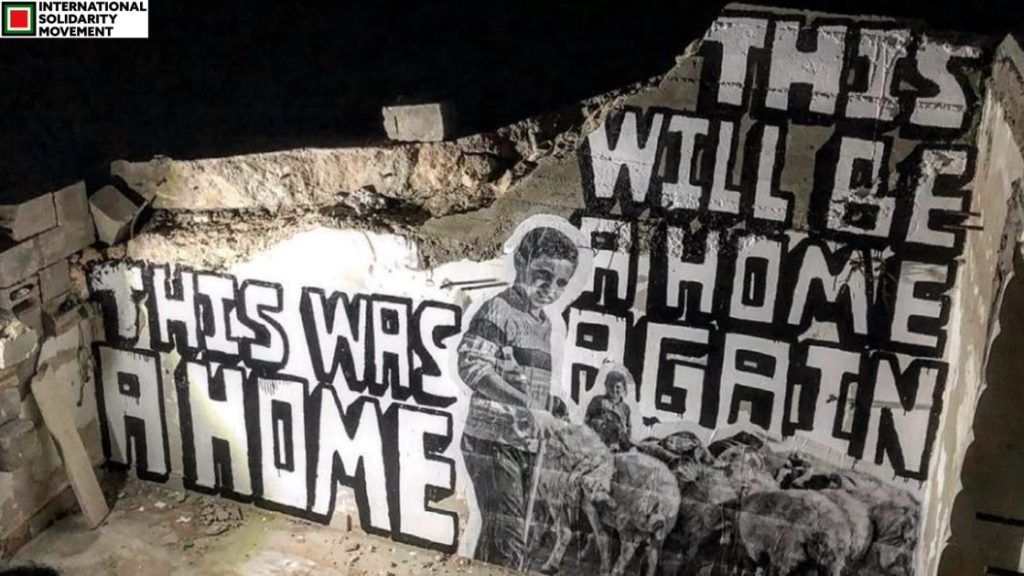
Yet, in Palestine, amid settler sieges and militia raids—not to mention maimings and murders—a resolute intergenerational commitment to land and life perseveres. Palestinians continue to refuse disappearance and protect territory. They plant trees in charred fields. They rebuild homes with salvaged cinder blocks. They sing resistance songs at funerals and teach children the names of vanished villages, cherished places, and martyrs they dearly miss and mourn.
These acts, seemingly small, constitute bold assertions of presence and an insistence on continuity—a living counter-archive that directly contests and subverts the accepted settler colonial record. “To exist is to resist”, so goes the Palestinian notion of sumud (steadfastness). Fanon knew precisely what this meant. The colonised never truly internalise the lies of inferiority, worthlessness, and wretchedness they have been told. In fact, they use the mendacity and malevolence of settlers as fuel:
The colonized know all that and roar with laughter every time they hear themselves called an animal by the other. For they know they are not animals. And at the very moment when they discover their humanity, they begin to sharpen their weapons to secure its victory. (p.8)
In the West Bank, that sharpening was present—not only of tools and will, but of clarity. I saw Palestinians refining their understanding of the Zionist coloniser’s designs and crafting modes of survival that doubled as forms of defiance. To remain on the land, to speak the names of lost loved ones denounced by occupiers, to reclaim ruins and convert them into shelters—these are the tactics and strategies of insurgent self-determination articulated in daily life.
The farmers who cultivate scorched fields, the children who read at home even after their school is destroyed, and the women who confront IOF commanders while in the Israeli sniper’s crosshairs all personify what Fanon refers to when speaking of the reciprocal recognition of equal worth:
The colonized subject thus discovers that his life, his breathing and his heartbeats are the same as the colonist’s. He discovers that the skin of a colonist is not worth more than the “native’s”. In other words, his world receives a fundamental jolt. The colonized’s revolutionary new assurance stems from this. If, in fact, my life is worth as much as the colonist’s, his look can no longer strike fear into me or nail me to the spot and his voice can no longer petrify me. I am no longer uneasy in his presence. In reality, to hell with him. (p.10)
This rupture—overturning a violent, racist, and sickening world order—is what I saw in the unyielding devotion of communities who refused to leave. It is what echoed in the daily work of the shepherds in the northern Jordan Valley and across the southern Hebron Hills, whose fields are laid to waste by settler arsonists but whose animals will still roam, and crops will still grow.
It lives in the art, poetry, and music of the Aida and Jenin refugee camps I passed through, where children play next to fortified watchtowers and IOF soldiers armed with assault rifles but draw murals animating scenes of rebellion and liberation anyway. Markedly, freedom and safety should be contingent upon neither being infallible nor a “perfect victim”—no one must earn the right not to be slaughtered.
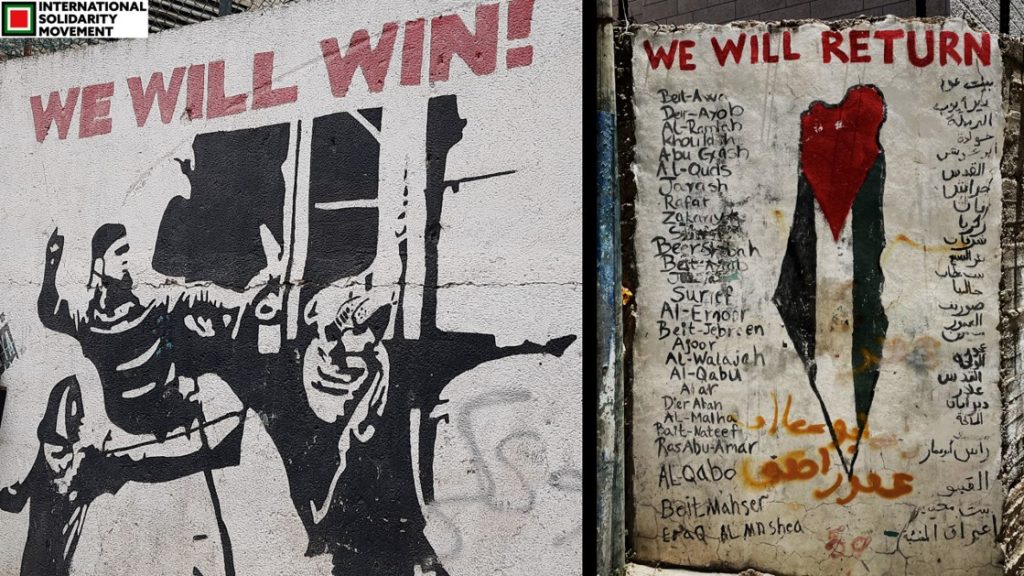
Barra barra mustawtinin
As the “Critical Geographies of the Shifting World Order” call for interventions alludes to, it is urgent to interrogate how the machinations of imperial decline and authoritarian resurgence are reconfiguring global systems of domination. Occupied Palestine epitomises this convergence: an epicentre where the historical and global faultlines of settler colonialism, racial animus, religious ethnonationalism, and both militarised apartheid and capital accumulation continue to collide.
What is being revealed are not only the changing contours of a colonial world order, but the liberatory modes of thought, practice, and international solidarity that are emerging to combat and dismantle it. Here, it must be reiterated that we all have much to learn from encampment students who, in exemplifying critical consciousness and principled action, recognised the conjuncture first and responded with courage and compassion where others continue to falter.
Concerning collective liberation, Palestine irrefutably remains ground zero. And while the Nakba has never ended and continues to be reproduced through Israel’s ceaseless acts of demolition, dispossession, detention, and death, so too endures the Palestinian refusal to surrender. Indeed, the future of Palestine will be determined and defined by neither an occupying army nor the walls of apartheid—but by those who tear them asunder.
If one thing remains clear about what I bore witness to whilst walking throughout the West Bank, it is that the settler colonial crimes of the guilty Zionist terror regime will never be purged away but by fire—if not blood, as John Brown would contend. Here, when considering the lasting legacies of empire and colonial present, there is only one worthwhile intervention left to make: Barra barra mustawtinin—“Settlers get the fuck out”.[2]
Notes
[1] All quotations come from Frantz Fanon, The Wretched of the Earth (translated by Richard Philcox). New York: Grove Press, 2004. [Originally published as Les Damnés de la terre. Paris: François Maspero, 1961.]
[2] I have taken liberties with the translation that I hope Fanon and Palestine will appreciate.
* * *
All images from International Solidarity Movement https://palsolidarity.org/ CC BY-SA 3.0
The author, “Calico”, is an ISM volunteer, adherent to the sixth, and professor of emancipatory politics engaged in direct action and the documentation of human rights violations across occupied Palestine. Based in L8-Toxteth, Liverpool, they can be reached at lesdamnes[at]pm[dot]me